Leave Your Message
0%

Choosing a dependable bamboo cutting board manufacturer isn’t just about glancing at pictures or comparing prices online. The real quality often hides deep inside the factory floor. You know how it is—looks can be deceiving.

In this guide, I’ve taken a close look at ten Chinese manufacturers that supply kitchenware brands, wholesalers, retailers, and even those in the hospitality industry. I’ve considered stuff like how experienced their factories are, where they source their bamboo, how they control adhesives, their pressing techniques, sanding quality, how they finish edges, packaging, and even their support for exports. These little details can really make a difference—like whether a board stays flat, resists splitting, or feels just right when you're chopping and prepping food daily. Honestly, small differences matter more than you might think.

We also peek behind the curtain at what each manufacturer actually proves — things like material specs, quality control procedures, samples, factory audits, and official food-contact safety certifications. Don’t just take a product page at face value, though. Sometimes, certifications or claims can be misleading or incomplete, which could lead to mistakes if you’re not careful.

A good supplier should be upfront about the bamboo they use—like its species, moisture content, how thick their boards are supposed to be, surface treatments, and how much they can customize. It’s definitely worth asking for samples—then actually test them out before making any big orders.

Now, keep in mind, this ranking is just a starting point. Things can change — manufacturing capacity, lead times, prices, and management standards aren’t set in stone. Some suppliers are really good at handling large retail orders but might fall short when it comes to smaller, customized batches. Others might have eye-catching designs but not much technical info to back it up. We’re aware of these limitations, of course.

Also, I get it—many buyers tend to search using similar keywords like Cutting Board. But honestly, having clear specs is way more important than just keyword volume. Whether you’re after engraved boards, juice grooves, handles, or top-tier restaurant quality sizes, double-check everything carefully to protect your investment. And every manufacturer profile here aims to give you a solid, reliable basis for comparing your options.
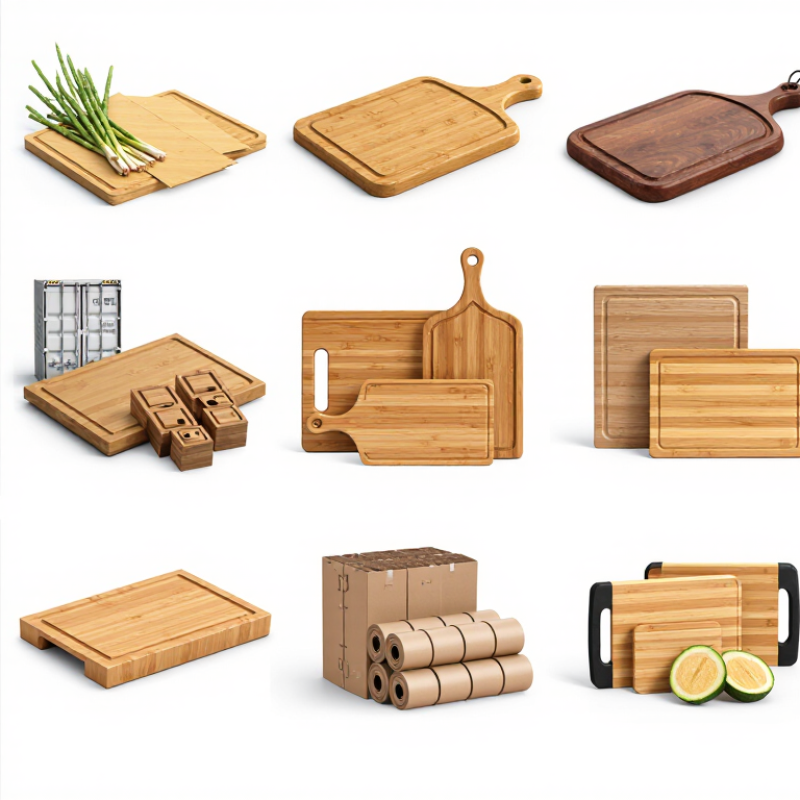
Top 10 Bamboo Cutting Board Manufacturers in China

Definition and Role of Bamboo Cutting Board Manufacturers in China

Bamboo cutting board manufacturers in China are companies that process bamboo strips into hygienic, durable kitchen surfaces. Their work includes material selection, drying, lamination, shaping, sanding, and quality inspection. A reliable manufacturer does more than produce a smooth board. It controls moisture levels, adhesive performance, edge finishing, and packaging throughout the production process.

In practice, these manufacturers connect bamboo growers, processing teams, testing facilities, and international buyers. Many offer custom dimensions, juice grooves, handles, engraved patterns, and retail-ready packaging. Food-contact safety is essential. Manufacturers should provide clear material specifications and support reasonable testing for formaldehyde migration, coating safety, and structural strength. Experience matters here. Small changes in drying or pressing can cause warping after shipment.

Not every bamboo board is equally sustainable. Bamboo grows quickly, but transportation, energy use, and adhesive selection still affect its environmental profile. This point deserves more careful attention. Some factories may also present polished samples while offering limited production records. Buyers should review factory experience, inspection procedures, sample consistency, and traceability before placing large orders. A dependable manufacturer communicates limitations honestly, keeps measurements stable, and corrects defects instead of hiding them. That practical reliability gives Chinese bamboo cutting board manufacturers an important role in global kitchenware production.

Key Standards for Evaluating Bamboo Cutting Board Manufacturers

Top 10 Bamboo Cutting Board Manufacturers in China

Key Standards for Evaluating Bamboo Cutting Board Manufacturers

Selecting among the top 10 bamboo cutting board manufacturers in China requires more than checking export volume. The WHO estimates that contaminated food causes 600 million illnesses worldwide each year. Hygiene evidence matters. Ask for factory audit records, sanitation procedures, and batch-level traceability. Small details matter.

Material compliance should be documented before sampling. The FDA Food Code 2022 requires food-contact surfaces to be smooth, durable, non-absorbent, and easy to clean. Regulation (EC) No. 1935/2004 also requires materials to avoid harmful migration into food. ISO 22000:2018 can support a supplier’s food-safety management system. It does not automatically prove that every board is safe. Request migration, formaldehyde, moisture, and adhesive test reports from independent laboratories. Check testing dates and sample numbers. Old reports are weak evidence.

Manufacturing consistency separates reliable suppliers from attractive catalogues. Inspect glue lines, rounded edges, warping, cracks, and sanding marks. During the Cutting Board Cutting test, a sharp knife should leave controlled marks, not loose fibers. INBAR reports that bamboo forests cover about 35 million hectares globally, yet sourcing claims still need verification. Ask for species identification and harvesting records. A perfect checklist is unrealistic; even experienced buyers can miss hidden adhesive defects. I would inspect random cartons, not only showroom samples. Packaging should prevent moisture exposure during long sea shipments.

Materials, Production Methods, and Quality Control

China’s leading bamboo cutting board manufacturers begin with material selection, not decoration. They commonly use mature Moso bamboo, chosen for density, renewability, and stable grain. Factories inspect culms for cracks, moisture variation, and insect damage before splitting. Fresh strips are dried in controlled chambers. The target is often 8–12% moisture, though local climate can change the result. That detail matters. Excess moisture may cause warping, while over-drying can make edges brittle. Some suppliers use laminated bamboo, while others press edge-grain or cross-grain panels. Each structure affects knife feel, weight, and resistance to splitting.

Production usually combines steam treatment, planing, adhesive application, hot pressing, sanding, and oil finishing. Food-contact adhesive must be selected carefully and applied in a measured layer. Operators check pressure, temperature, and pressing time for every batch. Automated equipment improves consistency, but skilled workers still inspect joints and corners. A small gap can trap moisture. CNC routing creates juice grooves and handles with repeatable dimensions. Final sanding should leave a smooth surface without removing too much working thickness. Some factories rush this stage. It shows in rough end grain and uneven grooves.

Reliable quality control continues after assembly. Inspectors measure flatness, thickness, bonding strength, surface smoothness, and moisture content. They also review odor, color uniformity, and visible contamination. Samples may undergo water exposure, repeated washing, and load testing. Packaging must protect boards from humidity during export. Documentation should connect inspections with batch numbers, materials, and corrective actions. No process is perfect. A manufacturer that records failures instead of hiding them offers stronger evidence of professional control. Buyers should request test records, approved samples, and clear tolerances before placing large orders.

Top 10 Bamboo Cutting Board Manufacturers in China

Top 10 Bamboo Cutting Board Manufacturers in China

China has a strong manufacturing base for bamboo cutting boards, supported by mature bamboo-processing regions and experienced woodworking teams. The top 10 manufacturers should be judged by more than attractive product photos. Stable bamboo sourcing, moisture control, precise lamination, and smooth edge finishing matter during daily kitchen use. A reliable factory can explain its material grades, adhesive standards, production steps, and inspection records clearly.

For buyers comparing the top 10 bamboo cutting board manufacturers in China, factory experience is important. Manufacturers with in-house cutting, pressing, sanding, and packaging usually control quality more effectively. Ask for samples before placing a large order. Check the board’s flatness, surface odor, grain alignment, drainage design, and resistance to light household washing.

Cutting Meat On Wood Cutting Board requires a dense, stable surface that will not splinter easily or retain excessive moisture.

Certifications and traceable documentation also deserve attention. However, a certificate alone does not prove consistent production quality. Request recent inspection reports and confirm whether testing applies to the exact product. A polished catalog can mislead. I would also examine small details, such as corner rounding, label accuracy, carton protection, and replacement procedures. Some manufacturers may promise low prices, yet use thinner materials or weaker bonding. That trade-off is easy to miss during negotiation. Regular factory communication and pre-shipment inspections can reduce such surprises.

Product Ranges, Customization, and Manufacturing Capabilities

China’s leading bamboo cutting board manufacturers usually offer more than one standard size. Their product ranges may include butcher blocks, serving boards, bread boards, drawer inserts, and lightweight kitchen boards. A reliable factory should explain bamboo species, strip direction, moisture control, and adhesive safety. These details affect warping, odor, and long-term durability.

Customization is often the strongest advantage. Buyers can request round, oval, or irregular shapes, with juice grooves, handles, feet, or engraved patterns. One Board Cutting Board may need a deep groove for meat preparation, while another requires a smooth surface for bakery use. Factories with CNC routers can produce consistent edges and holes. Skilled sanding teams still matter. Machines do not remove every rough corner.

Manufacturing capability should be checked through samples, production photos, and clear inspection records. Ask how suppliers control moisture before pressing bamboo layers. Confirm whether they test dimensions, bonding strength, surface smoothness, and packaging quality. Some manufacturers support small trial orders, which reduces unnecessary inventory risk. Others focus on high-volume production and private-label packaging. Neither option is automatically better. A factory may offer beautiful samples but struggle with repeat consistency. That weakness deserves attention. Buyers should compare communication speed, correction procedures, and shipment records, not only quoted prices. Even experienced purchasing teams can overlook small changes in bamboo color between batches. Regular approval samples remain useful.

Export Services, Certifications, and Buyer Selection Factors

China’s leading bamboo cutting board manufacturers should be judged by export discipline, not catalog size. INBAR reports that China has more than 7 million hectares of bamboo forest, supporting a deep and experienced supply base. However, raw material availability does not guarantee consistent quality. Buyers should request moisture records, adhesive specifications, edge-finishing details, and batch photographs before ordering.

Export services matter at the loading stage. Reliable factories provide pre-shipment inspections, carton drop tests, barcode labeling, and clear Incoterms. They should also prepare commercial invoices, packing lists, certificates of origin, and food-contact test reports. ISO 9001 indicates quality-system control, while FSC Chain of Custody can help verify responsibly sourced bamboo. For European buyers, testing should consider Regulation (EC) No. 1935/2004 and relevant national requirements. In the United States, FDA food-contact compliance is important, although it is not simply a universal product certificate.

Buyer selection needs practical checking. Ask for three samples from different production batches. Test flatness on a glass table. Inspect glue lines near the handle and corners. A certificate can look reassuring, yet it may cover only the factory, not the adhesive or finished Cutting Board Board. Grand View Research has identified continued growth in sustainable household-product demand, but market reports do not replace factory audits. I would also challenge unusually low prices; they may signal thinner boards, weaker packaging, or rushed drying. My own selection mistake would be trusting polished photos too quickly.

Top 10 Bamboo Cutting Board Manufacturers in China - Export Services, Certifications, and Buyer Selection Factors

Rank Anonymous Manufacturer Profile Main Production Area Core Product Capability Customization & OEM Services Typical MOQ Typical Lead Time Export Services Certifications / Compliance Documents Key Buyer Selection Factors
1 Profile A — Large-Scale Integrated Producer Zhejiang / Fujian Edge-grain, end-grain, laminated and juice-groove boards Private labeling, laser engraving, retail packaging, custom dimensions 500–1,000 pieces 25–40 days after approval Export packing, commercial invoices, packing lists, container loading and freight coordination FSC documentation where applicable, food-contact material declarations, third-party inspection support Production scale, stable quality control, packaging capacity and traceable bamboo sourcing
2 Profile B — Premium Kitchenware Specialist Zhejiang Thick laminated boards, serving boards, butcher-block style products Rounded edges, finger grooves, oil finishing, gift-box packaging 300–800 pieces 30–45 days after sample approval Sample development, export documentation and palletized shipment preparation Food-contact test reports, material safety declarations and inspection records upon request Surface finish, flatness, moisture control, edge quality and premium presentation
3 Profile C — High-Volume Retail Supplier Fujian Standard rectangular boards, multi-piece sets and promotional items Barcode labels, carton artwork, inserts, set combinations and private labels 1,000–3,000 pieces 20–35 days for standard products FOB and EXW quotations, carton optimization, container consolidation and shipping support Routine food-contact testing, packaging compliance support and factory audit cooperation Unit price, monthly capacity, carton efficiency, defect rate and replenishment speed
4 Profile D — Sustainable Material Manufacturer Anhui / Jiangxi Natural bamboo boards, low-finish products and eco-oriented kitchenware Sustainable packaging, recycled paper sleeves, custom embossing and natural finishes 500–1,500 pieces 30–45 days Sourcing statements, export packing, document preparation and inspection coordination FSC claims or certificates when applicable, formaldehyde-related test data and food-contact reports Bamboo traceability, adhesive safety, environmental claims and documentation transparency
5 Profile E — Restaurant and Hospitality Supplier Guangdong Large serving boards, paddle boards, cheese boards and commercial-use sizes Logo engraving, non-standard dimensions, hanging holes and bulk cartons 300–1,000 pieces 25–40 days Bulk export packing, mixed-SKU loading, freight quotations and replacement handling Food-contact declarations, coating information and batch inspection support Load-bearing performance, durability, consistent dimensions and commercial cleaning requirements
6 Profile F — Small-Batch Custom Factory Yunnan / Guangxi Small-format boards, shaped boards, gift sets and seasonal designs Low-volume prototypes, custom shapes, engraving and sample iteration 100–500 pieces 35–50 days Courier samples, export cartons, small-order consolidation and basic shipping support Product test reports available by order; certification scope should be confirmed before purchase Design flexibility, communication speed, sample accuracy and low minimum order quantity
7 Profile G — Online Marketplace Exporter Guangdong / Zhejiang Popular retail sizes, reversible boards, utensil bundles and gift items Retail-ready packaging, barcode application, product photography and logo printing 300–1,000 pieces 25–40 days Carton labeling, shipment tracking, export documents and fulfillment preparation Food-contact testing and packaging documentation should be requested for each SKU Retail packaging accuracy, SKU consistency, drop-test performance and fulfillment readiness
8 Profile H — Hotel and Promotional Gift Producer Fujian / Guangdong Branded gift boards, amenity sets, promotional boards and event merchandise Logo engraving, custom inserts, gift boxes, color sleeves and event quantities 500–2,000 pieces 20–35 days for approved designs Deadline planning, split shipments, export packaging and project-based coordination Material declarations, packaging specifications and inspection reports upon request Artwork control, delivery reliability, logo quality, packaging protection and project management
9 Profile I — Multi-Material Kitchenware Factory Jiangsu / Zhejiang Bamboo combined with wood, silicone, stainless steel or ceramic accessories Set development, component sourcing, assembly, custom molds and packaging 1,000–3,000 pieces 40–60 days for multi-component products Component consolidation, export documentation, quality inspection and shipment coordination Food-contact documents for each material, test reports and supplier declarations Component compatibility, assembly quality, regulatory documentation and supply-chain control
10 Profile J — Value-Focused Standard Product Supplier Hunan / Jiangxi Basic laminated boards, lightweight boards and kitchen accessory sets Simple logo printing, standard packaging, size adjustments and mixed cartons 1,000–5,000 pieces 20–35 days for standard designs FOB quotations, export cartons, container loading and basic documentation support Food-contact reports and compliance documents should be verified for the selected model Price competitiveness, production consistency, moisture control and supplier responsiveness

Note: The profiles are anonymized buyer-selection benchmarks. MOQ, lead time, export support and certification availability vary by product, order quantity and destination market; buyers should verify current documents, test reports and factory qualifications before placing an order.

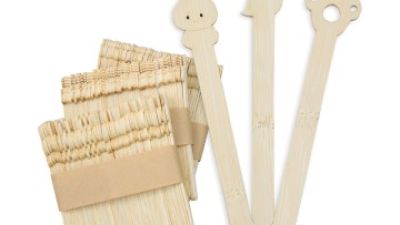
Bamboo Ice Cream Sticks: Food-Grade Disposable Tools for Handmade Frozen Treats

Bamboo ice cream sticks are food-grade disposable tools designed for handmade frozen treats, offering a practical and natural choice for homemade popsicles, fruit bars, yogurt bites, and other chilled desserts. Made for convenient single-use preparation, these sticks are easy to insert into molds and comfortable to hold once the treat is frozen. Their simple bamboo design brings a warm, rustic touch to family kitchens, dessert counters, and small creative food projects.

For a more playful presentation, the collection can include decorative styles featuring animal images on the top, along with adorable animal paw-print details. These charming designs add personality to every frozen treat and can make ordinary desserts feel more exciting. The cute shapes and innocent patterns are especially appealing to children, while young people may enjoy using them for parties, seasonal events, social gatherings, or creative dessert photography. Whether paired with colorful fruit pops, creamy ice cream, or homemade frozen snacks, these bamboo sticks combine everyday practicality with a fun visual experience.

FAQS

What do bamboo cutting board manufacturers in China produce?

They process bamboo strips into kitchen boards through drying, lamination, shaping, sanding, and inspection. Some boards are heavy. Products may include butcher blocks, serving boards, bread boards, drawer inserts, and lightweight boards.

How can buyers customize bamboo cutting boards?

Buyers can request round, oval, or irregular shapes. Options may include juice grooves, handles, feet, engraved patterns, and retail packaging. CNC equipment creates consistent holes and edges, but workers must still sand rough corners.

Why is moisture control important?

Incorrect moisture levels can cause warping after shipment. Factories should record moisture before pressing bamboo layers. A flat sample today may change later. That risk deserves attention.

How should buyers check product quality?

Request three samples from different production batches. Place each board on a glass table to check flatness. Inspect glue lines near handles and corners. Also review bonding strength, surface smoothness, and packaging tests.

What should manufacturers provide for food-contact safety?

Manufacturers should provide material specifications and adhesive details. Reasonable testing may cover formaldehyde migration, coating safety, and structural strength. A certificate may cover only the factory, not the finished board.

What export services should a reliable factory offer?

Useful services include pre-shipment inspections, carton drop tests, barcode labeling, and clear shipping terms. Factories should prepare invoices, packing lists, origin documents, and food-contact reports. Clear paperwork prevents avoidable delays.

How can buyers evaluate a factory beyond its catalog?

Review production photos, inspection records, factory experience, and shipment history. Ask how defects are corrected. Small trial orders can reduce inventory risk. I would not trust polished photos too quickly.

Is bamboo automatically a sustainable material?

No. Bamboo grows quickly, but transport, energy use, and adhesive choices affect its environmental profile. Responsible sourcing records provide useful evidence. The answer is not always simple.

Conclusion

This article presents a practical overview of the top 10 Bamboo Cutting Board manufacturers in China, explaining their role in supplying durable, hygienic, and environmentally friendly kitchen products to domestic and international markets. It outlines the key standards buyers should consider, including material quality, bamboo sourcing, structural stability, food-contact safety, workmanship, production capacity, and consistency in quality control. The article also discusses common materials, manufacturing methods, surface treatment, moisture management, and inspection procedures used to produce reliable cutting boards.

In addition, the article compares manufacturers by product range, customization options, packaging support, and ability to meet different order volumes. It reviews export services, relevant certifications, documentation, communication, lead times, and after-sales support. The final section offers practical buyer selection factors to help importers, wholesalers, retailers, and hospitality businesses identify suitable manufacturing partners. By combining production knowledge with purchasing guidance, the article provides a clear framework for evaluating Chinese suppliers and choosing Bamboo Cutting Board products that balance quality, functionality, sustainability, and cost.
Sophia

Sophia

Sophia is a dedicated marketing professional at Jiangxi Tianzhu Arts & Crafts Co., Ltd., a leading enterprise established in 2008, specializing in the innovative production and research of bamboo products. Located at the heart of the beautiful Jiangxi Province, in the 901 Forest Products Industrial......
Previous 2026 Best Mahjong Table Mats for Global Buyers