Picking the right wooden spoons for your tableware isn’t just about comparing prices or how shiny they look on the surface. It’s a bit more involved. Buyers around the world need to consider things like what type of wood is used, how the moisture is controlled, whether they’re safe for contact with food, how they’re packaged, and if the supplier is consistent. You might get a sample that feels smooth and perfect, but then, after a few washes, it could crack, or during shipping, a rough edge might appear. Details like these really matter, even if they seem small.
Did you know that, according to the OECD’s Global Plastics Outlook, global plastic waste hit about 353 million tonnes in 2019, but only around 9% of that was actually recycled? No wonder many restaurants, caterers, and retailers are turning to more renewable options for serving. That said, wooden products aren't automatically eco-friendly—they need to be sourced responsibly. The FAO’s 2020 Forest Resources report shows we have around 4.06 billion hectares of forests worldwide, but also that forests are still shrinking. So, if you’re going for sustainably sourced wood, you should be able to trace where it comes from and verify claims. The Forest Stewardship Council’s latest data highlights how crucial certified forest management is on a global scale.
For professional buyers, it’s essential to test the spoons in real-world food and handling conditions. Feel for the thickness, check the grain pattern and how smooth the edges are, sniff for any off odors, see how resistant they are to splinters, and make sure they’re well protected in their packaging. Always ask for documentation that proves they’re safe for contact with food, check if they’ve been fumigated when relevant, and review quality control reports at the batch level. Doing factory audits can help you see if what they're telling you matches the actual production process—and it can point out weak spots.
Remember, there’s no one-size-fits-all spoon that works perfectly for every market. Big catering businesses might care most about how well the spoons stack and how resistant they are to breaking, while premium retail shops might want those pale grains, custom branding, or individual wrapping. Cost is definitely a factor too, but be cautious—if a quote sounds too good to be true, it might hide thinner wood or inconsistent drying. Industry reports are helpful guides, but they shouldn’t be the only thing you rely on. A good buyer will combine published data, sample tests, factory inspections, and honest judgment before settling on wooden spoons for distribution around the world.
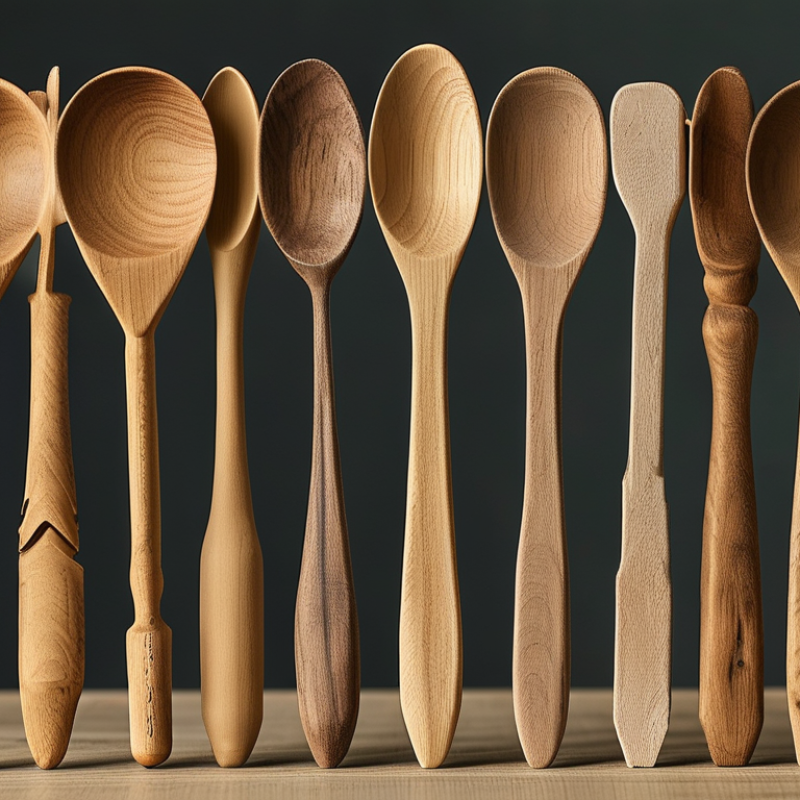
Top Tableware Wooden Spoons for Global Buyers?
What Defines a High-Quality Tableware Wooden Spoon
A high-quality wooden spoon begins with carefully selected, stable wood. Dense grain helps the spoon resist splitting, warping, and repeated kitchen use. The surface should feel smooth, without sharp edges, loose fibers, or deep cracks. Run a clean fingertip along the bowl and handle. Rough patches often reveal incomplete sanding. The spoon should also feel balanced in the hand. Comfort matters during long preparation tasks.
Food contact safety requires more than attractive appearance. The wood must be suitable for tableware and finished with a food-safe coating. The coating should not produce a strong chemical smell or sticky surface. Reliable manufacturers should provide material details, production records, and quality inspection information. Moisture control is equally important. Excess moisture can encourage deformation during storage and shipping. Buyers should check packaging, ventilation, and storage instructions.
Small details reveal manufacturing discipline. The bowl needs enough depth for sauces, while its edge should remain gentle against cookware. Handles should resist pressure without feeling unnecessarily heavy. In practical inspections, I look for consistent dimensions across several samples. One spoon can look excellent by chance. A larger sample tells more. Even careful grading is not perfect, because natural wood varies in color and grain. I still question any product that promises identical appearance in every piece. Responsible quality control accepts natural variation while rejecting unsafe defects. Proper washing and thorough drying also extend service life.
Top Tableware Wooden Spoons for Global Buyers?
Key Wood Types Used in Wooden Spoon Manufacturing
Wood selection affects a spoon’s strength, texture, weight, and service life. Beech is widely valued for its fine grain and balanced hardness. It feels smooth in the hand and resists everyday scraping. Maple is harder and pale, with a clean appearance that suits premium table settings. Birch offers a lighter body and practical durability. In factory inspections, I check grain direction, surface sanding, and moisture levels before judging quality. A beautiful spoon can still split if its wood was poorly dried.
Olive wood has striking grain patterns and a naturally dense structure. Each spoon looks different, which appeals to buyers seeking a handmade impression. However, irregular grain can make production less consistent. Rubberwood can be a practical choice when manufacturers use properly processed material. It offers stable performance and a relatively uniform texture. Bamboo is not technically wood, but it is common in spoon production. It is lightweight and renewable, though laminated pieces require careful adhesive and finish checks. No material is perfect.
Tips: Match wood hardness to the task. Soft woods suit gentle stirring, while harder woods handle thick sauces better. Ask suppliers for species details, moisture testing, finish information, and food-contact safety documentation. Avoid judging only by color. Grain, drying, and craftsmanship matter more. I still reconsider my preferences after long-term use; a spoon that feels excellent on day one may warp after repeated washing. Assess samples under real kitchen conditions before placing a large order.
| Wood Type | Typical Color and Grain | Approx. Janka Hardness | Key Manufacturing Advantages | Best Spoon Applications | Moisture and Durability Profile | Care Requirements | Buyer Considerations |
|---|---|---|---|---|---|---|---|
| Hard Maple | Light cream to pale brown; generally fine, closed, and uniform grain. | Approximately 1,450 lbf / 6,450 N | Hard, smooth, wear-resistant, and suitable for precise carving and turning. | Everyday cooking spoons, stirring spoons, serving utensils, and premium kitchen sets. | Good resistance to abrasion and normal kitchen use; prolonged soaking can still cause swelling or splitting. | Hand-wash, dry promptly, and periodically condition with a food-contact mineral oil or suitable spoon wax. | Light appearance and consistent texture make it suitable for clean, minimalist tableware designs. |
| European Beech | Pale cream to pinkish beige; fine, straight, and relatively even grain. | Approximately 1,300 lbf / 5,780 N | Uniform texture, easy machining, good strength, and reliable availability in many temperate regions. | High-volume cooking spoons, tasting spoons, ladles, and educational or hospitality tableware. | Moderate dimensional stability; performs well when properly seasoned and finished, but should not remain wet. | Wash by hand, avoid dishwashers, and keep away from prolonged direct heat. | A practical choice when consistent sizing, smooth sanding, and cost control are priorities. |
| Birch | White to pale yellow with a subtle, mostly straight grain. | Approximately 1,260 lbf / 5,600 N | Fine texture, relatively light weight, and good machinability for smooth, simple forms. | Lightweight kitchen spoons, sampling spoons, children’s utensils, and promotional food-service items. | Moderate hardness and moderate moisture resistance; requires thorough drying after washing. | Use mild soap, dry immediately, and re-oil when the surface appears dry or pale. | Works well for natural-looking products where low visual contrast and light weight are desirable. |
| Acacia | Golden brown to medium brown; often features contrasting grain and darker streaks. | Approximately 1,750 lbf / 7,800 N | Hard, visually distinctive, and relatively resistant to wear; supports decorative and functional designs. | Serving spoons, salad servers, gift sets, and statement tableware. | Good durability for normal use, although changing moisture levels may lead to movement or surface checking. | Hand-wash only, dry immediately, and maintain with a food-safe conditioning treatment. | Natural color variation is part of the material character; product specifications should allow for visual differences. |
| Olive Wood | Warm cream to honey brown with irregular dark streaks and highly figured grain. | Approximately 2,200 lbf / 9,800 N | Very hard, dense, naturally attractive, and capable of producing highly distinctive grain patterns. | Premium serving spoons, specialty tasting utensils, salad servers, and gift-oriented collections. | Dense and durable, but irregular grain can make machining slower and may increase production complexity. | Hand-wash, dry promptly, avoid soaking, and apply food-contact mineral oil regularly. | Best suited to premium positioning; each piece can vary substantially in color and grain appearance. |
| Rubberwood | Light cream to pale beige; generally straight and fairly uniform grain. | Approximately 960 lbf / 4,270 N | Easy to machine, relatively light, and commonly available in plantation-grown supply chains. | Everyday spoons, entry-level utensil sets, kitchen accessories, and high-volume programs. | Moderate hardness; proper kiln-drying and finishing are important for dimensional stability and service life. | Keep dry between uses, avoid dishwasher cleaning, and recondition the surface as needed. | Often selected for balanced cost and pale appearance; manufacturing quality depends strongly on drying and finishing control. |
| Walnut | Light brown to chocolate brown; usually straight grain with occasional waves or curls. | Approximately 1,010 lbf / 4,490 N | Good workability, smooth finish, attractive dark color, and a refined visual appearance. | Serving spoons, specialty utensils, presentation sets, and darker-toned kitchen collections. | Moderately hard and reasonably stable; deep scratches and prolonged moisture can affect the finish. | Hand-wash only, dry immediately, and use a suitable food-contact oil or wax. | Provides strong color contrast against light foods and ceramics; color variation should be expected. |
| Cherry | Light pinkish brown that can deepen toward reddish brown with age and light exposure. | Approximately 950 lbf / 4,230 N | Smooth texture, good workability, and a warm appearance that develops over time. | Cooking spoons, serving utensils, coordinated kitchen collections, and lifestyle tableware. | Moderate hardness and generally good stability; not intended for continuous wet storage. | Wash by hand, dry promptly, and maintain the surface with an appropriate food-safe conditioner. | Color naturally changes with exposure to light, which can create a richer appearance over the product’s life. |
| Beechwood Bamboo | Not included: bamboo is a grass, not a wood species, and should be specified separately in product documentation. | Varies by species, construction, and manufacturing method | Can be lightweight and renewable when sourced and processed responsibly; laminated construction is common. | Lightweight utensils, travel spoons, serving tools, and flat-pack kitchenware. | Performance depends on bamboo species, adhesives, lamination, and surface treatment rather than wood hardness alone. | Hand-wash, dry thoroughly, and verify that coatings and adhesives are suitable for food contact. | Use the term “bamboo utensil” rather than “wooden spoon” when accurate material labeling is required. |
General specification note: Janka hardness values are approximate reference figures and can vary by species, growth conditions, moisture content, and test method. For food-contact tableware, buyers should confirm applicable safety requirements, coatings, adhesives, traceability, and moisture-control processes for the destination market.
Top Tableware Wooden Spoons for Global Buyers
Essential Features for Safe and Comfortable Tableware Use
A reliable wooden spoon should feel balanced before it touches food. Hold it by the handle and check for sharp edges, cracks, or rough patches. Smoothly sanded wood reduces splinters and feels gentler during long meals. A rounded bowl can scoop rice, soup, or vegetables without scraping cookware.
Material selection matters. Dense, close-grained hardwood usually resists moisture better than soft wood. The spoon should have a food-contact-safe finish with no strong chemical odor. Buyers should request material details, finish information, and test documentation from suppliers. Requirements can differ between countries, so local food-contact standards deserve careful review.
Comfort also depends on proportion. A handle that is too thin may tire the hand, while one that is too thick can feel awkward. A moderate length helps prevent contact with hot cookware and keeps serving practical. Still, “comfortable” is not universal. Larger hands may prefer a wider grip, while children need smaller utensils.
Care affects safety. Wash wooden spoons promptly with mild soap and warm water. Dry them upright or in open air, not inside a damp drawer. Avoid prolonged soaking and harsh cleaning cycles, which may split the grain. Apply a suitable food-safe conditioning oil when the surface looks dry.
Small flaws can matter. I once overlooked a shallow crack near the bowl, and it widened after repeated washing. No spoon lasts forever. Replace any utensil that splinters, smells unusual, or develops deep grooves.
Essential Features for Safe and Comfortable Tableware Use
The chart compares the Janka hardness of commonly used spoon woods. Hardness can support durability and resistance to surface wear, but safe tableware performance also depends on smooth finishing, food-contact-safe treatment, proper drying, and a comfortable handle design. Values are approximate Janka hardness ratings in pounds-force, based on published wood-property data from the USDA Forest Products Laboratory.
Top Tableware Wooden Spoons for Global Buyers
When comparing wooden spoons, start with size rather than appearance. A 20-centimeter spoon suits coffee, desserts, and small serving bowls. Larger 30-centimeter models provide safer reach in deep pots. Measure the bowl before ordering. I once selected a beautiful spoon that felt awkward in a narrow container. That mistake taught me to test proportion, not just photographs.
Shape changes control and cleaning. A rounded bowl holds sauces well, while a flatter bowl helps scrape pans gently. The handle should feel balanced without sharp edges or sudden thickness changes. Check the grain direction, because unstable grain may increase splitting during repeated washing. Short samples can hide this weakness. Request full-size samples when possible.
Finish deserves careful inspection. An unfinished surface feels natural but may absorb oil and color quickly. A properly cured food-contact finish usually feels smooth, not sticky or strongly scented. Ask for finish details, care instructions, moisture testing, and production consistency. These records are more useful than polished product claims. For international orders, confirm dimensions in both metric and customary units. Even careful buyers can overlook packaging space, handle alignment, or slight color variation between batches.
A wooden spoon should feel smooth, dry, and balanced before it reaches a kitchen. Buyers should request the wood species, origin, and processing records. Food-contact rules differ between markets, so one certificate rarely satisfies every destination. European buyers may review compliance with food-contact framework rules and good manufacturing practices. Other markets may require local migration, chemical, or microbial testing. Ask for reports from competent laboratories, not only factory declarations.
Safety begins with the material. The wood should be free from decay, insect damage, sharp fibers, and visible cracks. Moisture control matters. Excess moisture can encourage mold during storage and shipping. Excessive drying may cause splitting near the handle. Coatings deserve close attention because they touch food directly. Confirm that finishes are suitable for food contact and tested for restricted substances. Traceability should connect each batch to production dates, suppliers, and inspection records.
Small details reveal quality. Run a clean cloth over the bowl and handle; loose fibers should not catch. Check the edge by hand, but do not ignore microscopic defects. A spoon can look polished and still fail after repeated washing. Testing should include durability, odor, color transfer, and resistance to common kitchen temperatures. I would also question vague claims such as “natural” or “eco-safe.” These words sound reassuring, but they are not complete safety evidence. Standards help, yet inspections remain imperfect. Human judgment still matters.
For global buyers, wooden spoons should combine safe use, stable quality, and responsible sourcing. The wood species matters. Fast-growing hardwoods can reduce pressure on slower-growing forests. However, “natural” does not automatically mean sustainable. Buyers should request harvest records, origin details, and recognized forest-management certification.
A reliable supplier can explain how trees are replaced and how waste is handled. Ask whether damaged spoons become fuel, mulch, or production scraps. Kiln drying also deserves attention. Proper drying reduces cracking, mold risks, and unnecessary product loss. Every spoon should have a smooth surface, consistent thickness, and a finish suitable for food contact.
Packaging creates another environmental decision. Recycled paper sleeves may reduce plastic use, but they can weaken during humid shipping. Reusable cartons may perform better in some supply chains. The best option depends on transport distance, climate, and warehouse conditions. Buyers should compare total impact, not one attractive material.
No sourcing plan is perfect. Some suppliers provide beautiful certificates but weak traceability. Others offer strong records with less polished packaging. That gap requires careful questioning and occasional factory audits. A practical checklist should include wood origin, chemical controls, worker safety, moisture testing, packaging data, and replacement policies. Small details often reveal whether sustainability is documented or merely advertised.
Top Tableware Wooden Spoons for Global Buyers?
How Global Buyers Can Evaluate Suppliers and Place Orders
Global buyers should evaluate wooden spoon suppliers beyond attractive catalog photos. Request production samples with matching dimensions, surface finish, and packaging. Check the spoon’s length, bowl depth, edge smoothness, and handle strength by hand. Small differences can affect serving comfort and packing efficiency.
Ask suppliers about wood species, moisture control, treatment methods, and food-contact documentation. Reliable suppliers should provide clear material records and recent quality reports. Confirm whether inspections occur before shipment, not only after production. A factory visit or independent inspection can reveal uneven sanding, cracked handles, or mixed materials. These details matter.
Place a written order with exact quantities, tolerances, packaging rules, delivery terms, and acceptable defect limits. Request a pre-production sample before approving mass production. Clarify the minimum order quantity and replacement process for damaged goods. Payment should follow documented milestones when possible. Keep communication in one file. It prevents expensive misunderstandings.
Do not trust low prices too quickly. Cheap spoons may hide inconsistent thickness or weak cartons. A practical buyer should compare total landed cost, not unit price alone. I would also leave room for doubt. Samples can look excellent while bulk production changes. Recheck randomly during manufacturing, even when the supplier seems experienced. That extra step can feel inconvenient, but it protects the order.
: Hold the spoon and inspect sharp edges, cracks, splinters, and rough patches. The surface should feel smooth and gentle.
Dense, close-grained hardwood usually handles moisture better than soft wood. Ask for the wood species, origin, and safety documents.
The handle should feel balanced, neither too thin nor too thick. Larger hands may need wider grips, while children need smaller utensils.
A 20-centimeter spoon suits desserts and small bowls. A 30-centimeter spoon provides safer reach in deeper pots.
A rounded bowl holds soup and sauces well. A flatter bowl helps scrape pans gently without damaging cookware.
Choose a smooth, cured finish suitable for food contact. Avoid strong chemical odors, sticky surfaces, and unclear finish information.
Wash them promptly with mild soap and warm water. Dry them upright or in open air. Avoid soaking.
Replace it when splinters, deep grooves, unusual smells, or widening cracks appear. Small flaws can grow.
Request harvest records, wood origin, forest-management documents, and waste-handling details. “Natural” alone proves little.
I once trusted a beautiful sample and missed a shallow crack. Request full-size samples and inspect repeated-washing performance.
For global buyers, high-quality Tableware Wooden Spoons should combine reliable performance, smooth craftsmanship, and safe contact with food. The choice of wood affects durability, weight, appearance, and moisture resistance, while a well-designed shape should provide a comfortable grip and effective serving or cooking performance. Buyers should compare spoon sizes, bowl shapes, handle designs, surface smoothness, and food-safe finishes according to their intended market and application. Careful inspection can help identify products that are sturdy, evenly finished, and free from cracks, rough edges, or excessive odor.
International purchasing also requires attention to safety documentation, quality-control procedures, packaging, and traceability. Responsible suppliers should demonstrate sustainable wood sourcing, efficient production, and environmentally considerate packaging practices. Before placing an order, buyers can evaluate supplier experience, sample quality, customization options, production capacity, inspection processes, lead times, and communication standards. Clear specifications and transparent agreements help ensure consistent quality, smoother logistics, and dependable long-term cooperation.