Choosing the right supplier in China for your Fork, Spoon, and Knife program isn’t just about comparing prices—it’s way more nuanced than that. A shiny catalog can sometimes hide underlying issues like weak quality control, unclear specs, or unstable production. This guide shares practical tips for evaluating top manufacturers and trading companies, focusing on solid evidence rather than just pretty claims.
If you’ve got experience in this, you know to check things like steel quality, thickness, balance, edge finish, and surface polish. For example, a good sample should feel comfortable in your hand and have smooth edges around the handle. Suppliers should also clarify whether they’re using 18/10 stainless steel, 18/0, or another approved material. Visiting their factory, reviewing production photos, inspection records, and food-contact safety documentation all help build trust. It's also super important to get clear info on minimum order quantities, custom logos, packaging options, and lead times—little details like these really add up.
The most reliable suppliers are those who stay consistent from the quote all the way to delivery. They’re open to reasonable sample testing and will explain how they handle defects if they pop up. But hey, no supplier’s perfect—brand-name companies might run into delays during busy seasons or sometimes misunderstand custom requests. That kind of hiccup should be acknowledged, not hidden. Before making a choice, it’s smart to compare verified capabilities, seek independent feedback, and review current samples. Taking this overall approach helps you make safer purchases, ensures more reliable delivery, and sets the stage for a long-lasting business relationship. This review below highlights top options in China, evaluated by these standards, tailored to different budgets and needs.
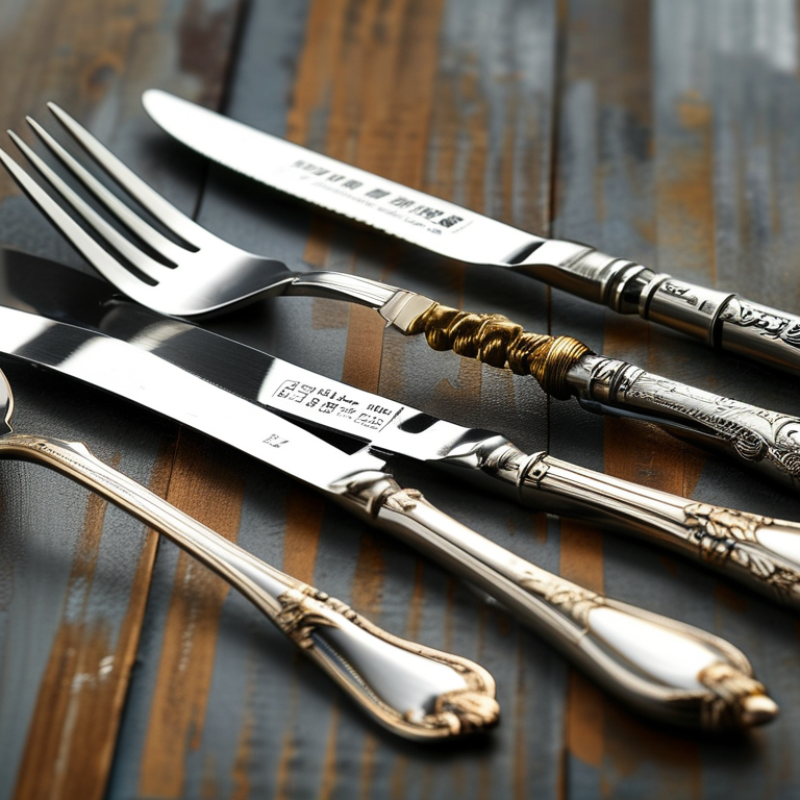
China’s fork, spoon, and knife market is broad, but “top supplier” depends on the buyer’s needs. Some factories focus on hotel flatware, while others produce retail-ready Knife Fork And Spoon Set collections. Many operate near established coastal manufacturing clusters, where metal processing and export services are concentrated. The real difference appears in control.
A reliable supplier should explain steel grades, thickness, polishing steps, and handle construction clearly. For daily tableware, 304 stainless steel is common, while 18/0 steel may suit cost-sensitive projects. Ask for samples before discussing large orders. Check edge smoothness, spoon balance, weld points, and surface marks under strong light. Request test reports for food-contact safety, but do not treat paperwork as perfect proof. Independent verification still matters.
MOQ, packaging, customization, and production lead time can change the final price more than expected. A supplier offering a very low quote may use thinner material or simpler polishing. That is not automatically dishonest, but the specification must be written and measurable. Factory audits, video inspections, and clear pre-shipment checks improve reliability. Still, no sourcing method removes every risk. Even experienced buyers can overlook carton damage or inconsistent finishing. Photographs cannot reveal how a handle feels after repeated washing.
China’s fork, spoon, and knife suppliers usually serve several product categories. Stainless steel cutlery remains popular for restaurants, hotels, airlines, and household use. Common grades include 410, 430, and 304 stainless steel. Each grade affects corrosion resistance, hardness, and purchasing cost.
Wooden and bamboo utensils suit takeaway meals, catering events, and eco-conscious food service. Buyers searching for Oem Wooden Knife Fork Spoon should check wood sourcing, moisture control, smooth edges, and food-contact testing. Plastic and reusable polymer sets also require careful material verification. Some factories offer custom colors, embossed logos, retail boxes, paper sleeves, and complete meal kits.
Manufacturing capabilities can vary sharply. Sheet cutting, stamping, forging, welding, polishing, and ultrasonic cleaning support different cutlery designs. Advanced facilities may provide mirror polishing, brushed finishes, laser marking, and automated inspection. Quality teams should measure thickness, weight, edge smoothness, and handle alignment. Samples matter.
A supplier may claim full customization but outsource important steps. That can increase delays and quality differences. Ask for process records, material certificates, inspection reports, and production photos. Factory audits should review cleanliness, worker training, packaging protection, and traceability. The cheapest quotation is not always the most reliable choice. Specifications still need refinement. Even experienced buyers can overlook packaging strength or actual utensil balance. Small pilot orders reveal problems before large production begins.
Choosing the top China fork, spoon, and knife suppliers requires more than comparing prices.
According to UN Comtrade 2023 data, China remained a leading exporter of tableware under HS code 8215, with export value exceeding one billion US dollars. However, trade figures combine different product types and quality levels. They do not prove factory capability.
A reliable evaluation starts with material verification. Ask for mill certificates showing 18/10, 18/0, 430, or 420 stainless steel grades. Request laboratory reports for corrosion resistance, metal migration, hardness, and dishwasher performance. Independent testing is stronger than a supplier’s internal document. Check whether the report matches the exact product, finish, and production batch.
I have seen attractive samples fail after repeated washing. Appearance can mislead.
Tips: Visit the factory, or arrange a documented third-party audit. Review equipment, quality checkpoints, worker training, and packaging areas. Compare sample weight, edge smoothness, balance, and polishing under neutral lighting. Ask for production capacity, minimum order quantity, tooling ownership, lead time, and corrective-action records. ISO 9001 certification helps, but it is not a substitute for product testing. Also compare quotation details carefully; freight, molds, plating, packaging, and inspection fees may be excluded. Industry market reports often estimate different cutlery values because their definitions vary. That uncertainty deserves attention. A supplier with the lowest offer may become expensive after defects, delays, and repeated inspections.
China’s fork, spoon, and knife suppliers usually fall into four practical types. Integrated factories produce stainless steel tableware at scale, often supporting consistent polishing, stamping, and packaging. OEM/ODM suppliers customize a Fork Knife Set for hotels, restaurants, or retailers. Specialist workshops focus on premium finishes, unusual handles, or gift packaging. Trading companies offer broader catalogs, but production control may be less visible.
Grand View Research reported that the global cutlery market was valued at about USD 10 billion in 2023, with steady growth expected through 2030. This demand encourages suppliers to improve automation and quality checks. In factory visits, buyers should inspect edge smoothness, handle joins, surface uniformity, and carton protection. A low unit price can look brilliant. It may not be. Freight, sampling, and rejected pieces can change the real cost.
Tips: Match the supplier type to your order. Choose a factory for repeated volume and stable specifications. Consider an OEM/ODM partner when packaging or geometry matters. Ask trading companies for factory audit records and current production photos. Request material certificates, food-contact test reports, and a pre-shipment inspection. ISO 9001 certification can support process control, but it does not replace product testing. One detail is often missed: polished steel can show fingerprints quickly. A practical sample review under retail lighting may reveal more than a spreadsheet.
| Supplier Type | Primary Specialization | Common Product Range | Typical Materials | Key Manufacturing Strengths | Best For | Important Verification Points |
|---|---|---|---|---|---|---|
| Large-scale stainless-steel manufacturers | High-volume production of standard flatware for foodservice and retail | Table knives, dinner forks, tablespoons, teaspoons, serving utensils, cutlery sets | Stainless steel grades such as 18/0, 18/8, and 18/10; some carbon-steel knife blades | Stamping, forging, rolling, polishing, mirror finishing, mass assembly, export packaging | Supermarkets, distributors, hotel groups, restaurant chains, and importers | Material grade, nickel and chromium composition, corrosion resistance, consistency between batches, factory capacity |
| OEM and private-label factories | Customized flatware manufactured to a buyer’s drawings or specifications | Custom-handle knives, logo-engraved spoons, branded forks, gift sets, coordinated tableware collections | Stainless steel, food-contact plastics, wood, bamboo, resin, and ceramic handle components | Tooling development, laser marking, color matching, handle assembly, customized packing | Hospitality groups, retail brands, promotional programs, and project-based buyers | Ownership of molds, prototype approval, logo accuracy, packaging artwork, minimum order quantity, confidentiality terms |
| Forged cutlery specialists | Premium and heavy-duty flatware produced through hot or cold forging processes | Forged table knives, steak knives, heavyweight forks, serving spoons, professional kitchen utensils | Stainless steel, hardened stainless-steel knife steel, and selected alloy steels | High structural strength, balanced weight, durable edges, precision grinding, premium polishing | Fine dining restaurants, hotels, catering companies, and premium retail collections | Hardness, blade sharpness and retention, handle-to-blade joint, balance, surface uniformity |
| Stamped flatware producers | Cost-efficient production of lightweight and standard-use utensils | Everyday forks, spoons, lightweight knives, cafeteria cutlery, disposable-alternative sets | Mainly stainless steel; some products use food-contact polypropylene or other approved polymers | Progressive stamping, high-speed forming, automated polishing, economical packing | Cafeterias, schools, hospitals, quick-service restaurants, and value-oriented retailers | Edge safety, dimensional consistency, deformation resistance, sharp burr removal, food-contact compliance |
| Cutlery and tableware trading companies | Sourcing, consolidation, product selection, and export coordination from multiple factories | Mixed cutlery collections, assorted finishes, tableware combinations, seasonal and promotional items | Stainless steel, aluminum, bamboo, wood, silicone, plastic, and mixed-material products | Multi-supplier coordination, low-volume assortment sourcing, packaging development, export documentation | Small and medium importers, online retailers, hospitality buyers, and buyers needing multiple categories | Actual factory identity, quality-control responsibility, product traceability, sample-to-order consistency, trading margin |
| Eco-friendly utensil suppliers | Reusable or lower-plastic alternatives for foodservice and consumer markets | Reusable stainless-steel sets, bamboo-handled cutlery, reusable travel sets, compostable-service alternatives | Stainless steel, bamboo, wood, paper-based materials, and certified compostable bioplastics | Material sourcing, reusable packaging, lifecycle-focused design, retail-ready eco packaging | Sustainable restaurants, institutional catering, outdoor products, and environmentally focused retailers | Food-contact safety, chemical migration, durability, compostability claims, responsible sourcing, packaging recyclability |
| Premium gift-set and hospitality suppliers | Presentation-focused cutlery collections for gifting, hotels, and upscale dining | Gift boxes, wedding sets, hotel flatware, polished collections, specialty serving sets | 18/8 or 18/10 stainless steel, selected plated finishes, wood, resin, and premium packaging materials | Decorative finishing, PVD coating, coordinated sets, rigid-box packaging, visual quality inspection | Hotels, wedding retailers, corporate gifting programs, department stores, and premium e-commerce | Coating adhesion, abrasion resistance, color consistency, packaging protection, replacement-part availability |
| Specialty knife and professional utensil suppliers | Professional knives and purpose-built utensils for culinary and food-processing applications | Chef knives, steak knives, oyster forks, pastry tools, kitchen spoons, carving and serving utensils | Stainless steel, hardened high-carbon stainless steel, nylon, polypropylene, wood, and silicone | Heat treatment, grinding, sharpening, ergonomic handle design, hygienic construction | Professional kitchens, food processors, culinary schools, butchers, and catering operations | Blade hardness, corrosion resistance, handle hygiene, cutting performance, safety testing, and applicable food-contact rules |
Choosing among China fork, spoon, and knife suppliers requires more than comparing prices. Quality begins with food-contact materials and controlled production. 304 stainless steel offers strong corrosion resistance for daily dining, while 430 stainless steel may suit budget ranges. Ask for material reports, thickness data, and polishing details. A thin knife can feel sharp but bend during ordinary use.
Reliable suppliers should explain inspection procedures clearly. Check edge consistency, weld points, surface scratches, and handle stability. For a Knife And Fork Set, matching weight and balance matter greatly. A spoon should feel comfortable, not hollow or rough. Suppliers with traceable batch records and independent testing provide stronger confidence. Still, a perfect sample may not represent every shipment. That is worth questioning.
Tips: Request pre-production samples and compare them under bright light. Confirm carton strength, packaging dimensions, and acceptable defect limits before ordering. Customization can include laser logos, colored handles, gift boxes, and brushed or mirror finishes. PVD coatings create attractive colors, but coating durability needs practical testing. Ask suppliers to rub finished pieces repeatedly with a damp cloth and inspect fading. Some customization requests look impressive in photos but add production risk. Keep the design simple when consistency matters.
Quality flatware suppliers commonly work with food-contact stainless steel grades such as 304, 316, and 430. The chart shows the minimum alloying-element requirements by weight based on commonly specified ASTM A240 composition ranges.
Grade 304 is widely selected for everyday flatware because of its balance of corrosion resistance, durability, and cost. Grade 316 adds molybdenum for improved resistance in salty or acidic environments, while grade 430 is a nickel-free ferritic option often used for cost-sensitive products. Customization may include mirror or satin polishing, laser logos, embossed patterns, PVD color coatings, handle designs, gift packaging, and OEM or ODM specifications.
Pricing depends on steel grade, weight, finish, and production volume. Stainless steel 18/0 cutlery often costs less than 18/10 products. Basic factory pricing may range from $0.08 to $0.60 per piece, while heavier hotel-grade sets can cost more. These figures are only starting points. Packaging, polishing, and shipping can change the final cost.
Minimum order quantities vary by supplier and product type. Common MOQs range from 1,000 to 5,000 pieces per design. Custom logos, gift boxes, and special finishes usually require higher quantities. Ask for separate prices at 1,000, 5,000, and 10,000 pieces. This exposes hidden volume differences. Request a sample before approving bulk production. A polished sample may not represent every batch perfectly.
Export planning requires more than comparing unit prices. Confirm carton dimensions, gross weight, loading capacity, and lead time. These details affect freight charges and warehouse planning. Ask whether the supplier provides commercial invoices, packing lists, and certificates required by your destination market. Product descriptions should match the actual material and finish. Check tariff classifications with a qualified customs professional. Some buyers overlook breakage risks in retail packaging. Others underestimate inspection costs. I have found that clear tolerances for scratches, stains, and uneven edges prevent difficult disputes later. Payment terms also deserve careful review, especially when the first order is large.
: Integrated factories handle large volumes and stable specifications. OEM/ODM suppliers customize shapes, packaging, and finishes. Specialist workshops serve premium or unusual designs. Trading companies offer wider catalogs, but factory control may be less visible.
304 stainless steel suits many daily tableware projects. 18/0 stainless steel may reduce costs. The best choice depends on budget, durability, and required specifications. Always request material details in writing.
Request physical samples first. Inspect edge smoothness, spoon balance, handle joins, weld points, and surface marks under strong light. Try washing the samples repeatedly. A photograph cannot show how a handle feels.
The supplier may use thinner metal or simpler polishing. That is not automatically dishonest. However, missing freight, sampling, rejected pieces, or damaged cartons can increase the actual cost.
Include steel grade, thickness, dimensions, weight, polishing level, handle construction, packaging, and acceptable defects. Use measurable requirements. Vague wording creates arguments later.
Factory audits, video inspections, and pre-shipment checks can reduce uncertainty. Request current production photos and test reports. Independent verification remains useful. Paperwork is helpful, not perfect.
Check individual wrapping, inner boxes, carton strength, and moisture protection. Ask for carton dimensions and drop-test expectations. Inspect damaged cartons during sampling. This small detail is easily missed.
No. Process certification may support factory management, but it does not replace product testing. Request food-contact safety reports and material certificates. Test samples independently when the order matters.
Choose a factory for repeated volume and stable designs. Consider a trading company for broader product selection. Ask for audit records, production evidence, and clear factory information. More options can mean less visibility.
Inconsistent finishing, carton damage, and handle differences may still appear. No sourcing method removes every risk. Even experienced buyers overlook things. A careful process is useful, but never flawless.
China’s Fork Spoon Knife supplier market offers a broad range of manufacturers serving restaurants, hotels, catering businesses, retailers, and household consumers. Suppliers commonly produce stainless steel flatware, disposable sets, tableware collections, and customized products in different shapes, finishes, weights, and packaging formats. Their manufacturing capabilities may include stamping, forging, polishing, laser marking, color coating, and gift-box assembly, allowing buyers to select products suited to different markets and applications.
When evaluating suppliers, buyers should review material composition, production equipment, quality-control procedures, certifications, sample consistency, and customization support. Supplier types range from large integrated factories to specialized workshops and export-oriented trading companies, each offering different strengths in volume, flexibility, and product development. Pricing depends on materials, design complexity, order quantity, packaging, and finishing options, while minimum order requirements can vary significantly. Buyers should also confirm lead times, inspection processes, shipping terms, documentation, and export experience before placing an order. Careful comparison helps balance quality, cost, customization, and reliable delivery.